

A portfolio case study explains one project: the context, constraints, your role, the decisions you made and the evidence available. It should help a suitable client understand how you work, even when there is no published revenue or conversion metric.
Copy the case-study template
Project title and status
[Name the deliverable. State client work, self-initiated or hypothetical.]

Context
[Who needed what, and why? Use only details you may publish.]

Constraints
[Time, materials, budget, access, scope or technical limits.]

My role
[What I owned, what collaborators owned and what was outside my remit.]

Decisions
[Two or three important choices, the alternatives and the reasons.]

Deliverables
[What was produced. Include a permitted excerpt or annotated image.]

Evidence and limitations
[Measured result with source and period, qualitative evidence, or what the sample demonstrates. State what is not known.]

Next action
[Who this kind of work suits and a real enquiry route.]
Use the template in a document first. Replace each prompt with evidence from the actual project, then remove headings that add no useful information. One clear example is more persuasive than several projects padded with identical claims.
Worked hypothetical example
A clearer service page for a fictional design studio
Status: self-initiated writing exercise. No client commissioned it and no performance result was measured.
Context: the fictional studio offers small website projects, but its draft service page mixes introductions, process and deliverables. The exercise asks whether a prospective customer can understand what to request.
Constraints: one service page, supplied fictional brief, no customer interviews or analytics. The writer cannot claim that the assumed problem represents a real audience.
Role: research the supplied brief, plan the page and write the sample copy. Visual identity, development and paid advertising are outside the exercise.
Decision 1: put audience and scope before the studio biography so a reader can assess fit early.
Decision 2: separate deliverables from process. A three-step process explains collaboration; a deliverables list explains what the customer would receive.
Decision 3: use a specific enquiry invitation asking for intended pages and timing, rather than a vague “let’s create magic”.
Deliverable excerpt: “Planning a small studio website? Share the pages you need, the content you already have and your target launch month. We will explain the next scoping step.”
Evidence: the outline and extract show the writer’s structure and wording choices. There is no live deployment, customer feedback or conversion result. Testing the page with relevant readers would be a next step.
Next action: on a real portfolio, link to an accurate service description and a working enquiry route for a similar scoped writing project.
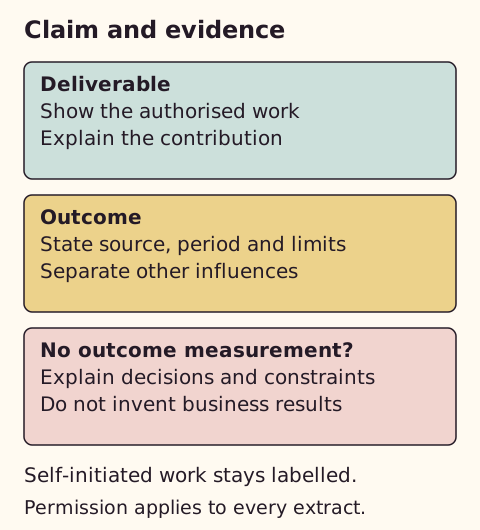
Make your contribution precise
Say “I wrote the service-page copy” if that is your role, rather than “I transformed the website”. Credit collaborators where appropriate and permitted. If the client supplied the strategy or research, distinguish that input from decisions you made.
What if you have no metrics?
- Measured outcome: name the metric, baseline, period and source you are permitted to disclose. Explain other factors; a before-and-after difference alone does not prove your work caused it.
- Qualitative evidence: use an authorised, accurate piece of feedback or a documented acceptance decision. Do not turn a general compliment into a sales claim.
- Deliverable evidence: show what was made and explain the decisions it demonstrates.
- Goal: describe what the work aimed to improve and say whether that outcome was measured.
“Designed to make the enquiry step clearer” is a statement of intent. “Increased enquiries” is a result claim requiring evidence. If the project is under a confidentiality agreement, a careful explanation of process may still require permission.
Use the separate quote-permission request when turning client feedback into a public endorsement. Keep the approved wording, attribution and use together.
Check rights and confidentiality
UK copyright ownership depends on how work was created and what was agreed. Commissioning work and employing its creator are different situations. Check the contract, third-party materials and any confidentiality duties before sharing. Having made an asset is not enough to assume every part may appear publicly.
Request permission for the specific text, images, client name and results you intend to show. Remove private contact details, credentials and sensitive data from excerpts. Renaming a client does not necessarily anonymise an identifiable project. The contract checklist helps frame these questions.
Put it in the portfolio
Give the project a descriptive title, lead with a short summary and place the strongest authorised evidence near the relevant decision. On a small screen, the extract and explanation should remain readable. Link from the overall portfolio website and use the case study selectively in the first-client plan.
Choose the strongest honest form of proof
I would choose an authorised client case study when it shows a relevant decision and your contribution clearly. A self-initiated example is the better choice when real work cannot be shared or does not match the service you now offer. A before-and-after comparison is useful only when both versions may be shown and the conditions are explained. For a new freelancer, one well-annotated self-initiated example beats an impressive client name with no permitted detail.
Calculate change without inventing causation
Hypothetical analytics example: an old page receives 20 enquiries from 1,000 eligible visits; a revised page receives 30 from 1,000. That is 2% versus 3%, an increase of one percentage point or 50% relative to the original rate. The visits and enquiries here are invented solely to demonstrate the arithmetic.
For a real claim, identify the analytics source, date ranges, event definition, traffic mix and other changes. More enquiries might follow a campaign or seasonal shift rather than your copy. If those conditions cannot be established, publish the deliverable and reasoning, and describe increased enquiries as an unmeasured goal. Do not attach this hypothetical calculation to your fictional studio as though a test took place.
Sources
Initial source checks: 9 September 2026. Later checks are dated in the relevant passages. External information can change.
Spot something that needs correcting? See the corrections process.